
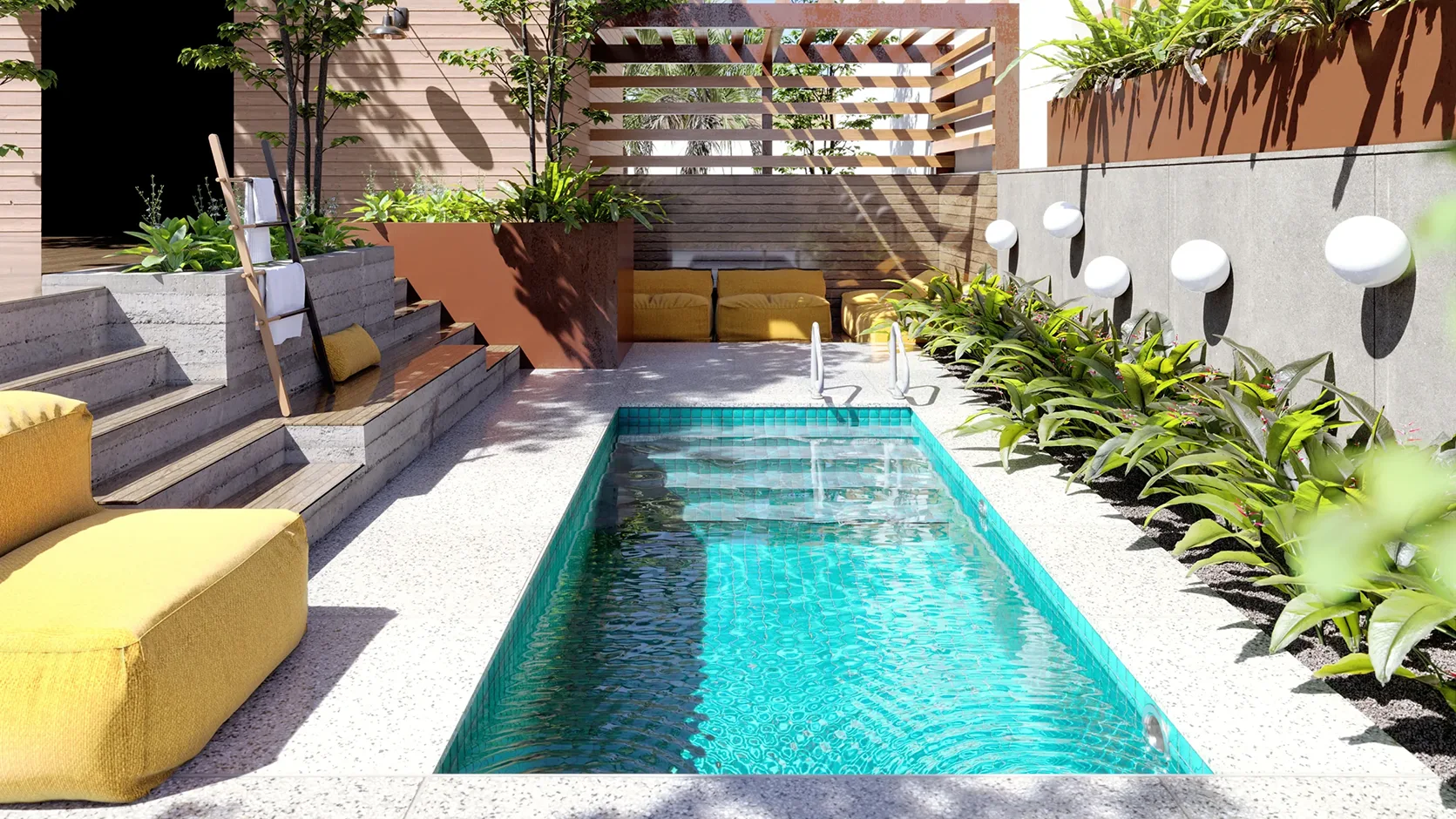
Let’s be honest. The classic backyard pool—that sprawling, kidney-shaped oasis—is a fantasy for most city dwellers. But what if you could have the cool, refreshing escape of a pool without needing a quarter-acre lot? Well, you can. Designing pools for small urban yards and rooftop spaces is all about reimagining what a pool can be. It’s about turning overlooked nooks and elevated perches into personal, liquid sanctuaries.
Here’s the deal: a small-space pool isn’t just a shrunken-down version of a big one. It’s a bespoke piece of landscape architecture. It demands cleverness, a dash of audacity, and a focus on multi-functionality. Ready to dive in?
Rethinking the “Swim”: It’s More Than Laps
First, shift your mindset. In an urban setting, the primary goal often isn’t doing fifty laps. It’s about ambiance, cooling off, and creating a visual centerpiece. Think of it as a “plunge pool” or “spool” (spa-pool combo). These compact vessels are deep enough to immerse yourself, often incorporating powerful jets for resistance swimming or hydrotherapy. They become a place to unwind after a long day, to entertain a few friends, or simply to gaze into—a shimmering, reflective element that makes your tiny garden feel expansive.
Honestly, the sound of moving water alone can mask city noise, transforming a balcony’s atmosphere entirely. That’s a win.
Key Considerations Before You Break Ground (Or Penetrate a Roof)
Structural Realities & Weight
This is non-negotiable, especially for rooftop pools. Water is heavy—about 8.34 pounds per gallon. A small pool can still weigh tens of thousands of pounds. A structural engineer must assess the load capacity of your roof or yard foundation. Often, lightweight materials like fiberglass or stainless steel are chosen over concrete. Sometimes, the solution is a “deck-level” pool that overflows, its water volume cleverly distributed.
Space Maximization: The Illusion of More
Good design tricks the eye. A few effective strategies:
- Clean, Rectangular Lines: Simple geometries feel modern and can make a space appear larger. A sleek, dark interior finish can make the water’s depth seem infinite.
- Mirroring & Reflection: Positioning the pool to reflect a nice view or a piece of sky literally doubles the visual impact.
- Level Integration: A “vanishing edge” on a rooftop, or a pool flush with the decking, creates a seamless, expansive look. It blurs the line between water and horizon.
Privacy & Microclimate
Urban spaces are exposed. You’ll need to think about screening—with greenery, stylish louvers, or textured glass. And remember, rooftops are windier and sunnier. Wind can ruin the ambiance and increase evaporation. Strategic glass barriers or pergolas can shelter the area. Speaking of sun, the microclimate affects water temperature, too. A darker finish absorbs heat, which can be a bonus in cooler climates.
Material & Style Choices That Sing in Small Spaces
Material choice sets the tone. For a contemporary, minimalist vibe, glass tile or dark porcelain is stunning. It’s like embedding a piece of the night sky into your floor. For a warmer, natural feel, textured stone coping or a wood-clad hot tub section adds organic contrast. Honestly, the trend is towards these material statements—treating the pool as a piece of artful, functional sculpture.
And let’s talk about multifunctionality. Built-in bench seating, submerged lounging ledges (Baja shelves), or an integrated hot tub section mean every inch works hard. The pool isn’t just for swimming; it’s for sitting, socializing, and soaking.
A Quick Glance at Pool Type Options
| Type | Best For | Key Consideration |
| Plunge Pool | Cooling off, tight footprints, exercise jets | Depth over length; often 6-8 ft deep. |
| Spool (Spa-Pool) | Year-round use, hydrotherapy, social hubs | Heating & jet systems add complexity. |
| Infinity Edge (Rooftop) | Maximizing views, dramatic aesthetic | Structural & waterproofing paramount. |
| Lap Pools (Narrow) | Serious swimmers in long, thin yards | Can feel corridor-like; needs clever landscaping. |
The Nuts and Bolts: Filtration, Access, and Greenery
You can’t see this stuff, but it’s the engine room. Compact, efficient filtration is key. Saltwater systems are popular for their softer feel and lower maintenance—a big plus in a high-use small pool. And access? How will equipment be delivered to a rooftop or a backyard with a narrow alley gate? This logistical puzzle needs solving early.
Now, don’t forget to soften the scene. Vertical gardens on adjacent walls, potted ornamental grasses, or a single, elegant tree in a raised planter can make the whole space feel lush and alive. The pool becomes part of a living ecosystem, not just a built object.
The True Reward: Your Urban Oasis Awaits
Sure, designing a pool for a small urban space comes with constraints. But those constraints are, in fact, what breed creativity. They force you to prioritize what truly matters: is it the cool dip at sunset? The sound of water? The glittering view from your 20th-floor terrace?
This isn’t about replicating a suburban resort. It’s about crafting a deeply personal retreat that responds directly to the rhythms and realities of city life. A place where you can literally immerse yourself in a moment of quiet, suspended above the bustling streets or tucked away in your own secret garden. That’s the magic. And honestly, it’s worth every bit of the careful planning.